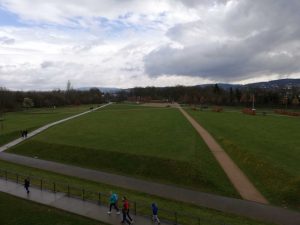
The new article on Generic Tasks is dedicated to a task from the ” Velocity ” category. With the help of the task wizard, this task can be created in the shortest possible time, as always, and the corresponding object can be found everywhere in your environment, especially in urban areas. You can read the first article on Generic Tasks, which also tells you how to get to the task wizard and what Generic Tasks are, here.

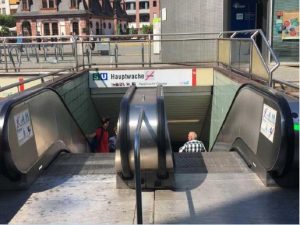
The object we are going to look at in this article is escalators. They are often found in public buildings or at the entrances to subway stations or train stations. The task that is available for escalators in the task wizard is:

“Determine the speed of the escalator. Give the result in meter per second. Give the result with two decimal places.”

Required for creating the task are the time duration, which the escalator needs to travel a well-defined distance. In addition, you can select whether the speed should be specified in m/s or in km/h. Based on the entered data, the wizard fills in the rest of the task form and only a picture needs to be added to complete the task.



In the next article we will deal with the probably most special category of Generic Tasks, the so-called GPS tasks. Until then, have fun and save time when creating MCM tasks with the Task Wizard!

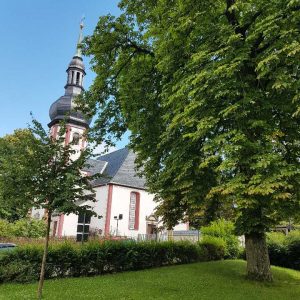
 

This Generic Tasks article is about the wizard task from the “Growth” topic. As always with our Generic Tasks, the tasks can be created in no time with the help of the task wizard, and this time you can find the corresponding objects everywhere in your environment with even greater certainty than usual. The first article on Generic Tasks, which also tells you how to get to the Task Wizard and what Generic Tasks are, can be found here.

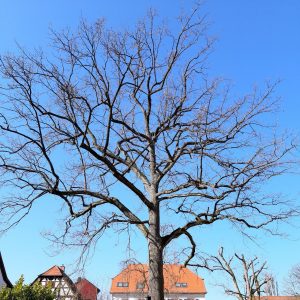
The objects we are looking at in this article on growth are, of course, trees. Whether in the countryside or in the city, the next MCM task is never far away. The task that is stored in the task wizard is:

“Determine the age of this tree. A tree with a diameter of approximately 40cm (measured in 130cm height) is about 72 years old. One can assume that the diameter grows proportionally. Give the result in years.”

To create the task, we need the circumference of the tree at a height of approx. 130 cm and the type of tree, i.e. whether it is an oak, a maple or a sycamore, since different trees naturally grow at different rates. The task can then be solved via the fact that the growth takes place almost linearly, so we can determine the growth of the tree per year via proportionality.


The next article on the issue of Generic Taks will deal with the topic of velocities, for which we will take a closer look at the escalator. Until then, have fun and save time when creating MCM tasks with the Task Wizard!
 

In a further article on our category Generic Tasks, we want to present you determinations of volume and mass. The focus will be on the bodies Cuboid and Cylinder. Further bodies will follow in future articles. We start with these forms as they occur in the environment very often and can be realised very quickly with our Task Wizard.

Objects that can be described with help of cuboids are for example concrete blocks or stones. Here, the difficulty varies according the unevennesses of the object, which can be balanced through averadged values. With benches, the difficulty can be increased as well, as they have to be described through different cuboids.

Cylinders are very suitbale to determine the volume of a tree trunk. Furthermore, many fountains are circular and therefore a good basis for calcualtions with the cylinder.


Especially with stones and tree trunks, the question of the object’s weight seems adequate through a given density. The mathematical background, as well as popular densities can be found in the following document Generic Tasks Volume 1.

Have you already tested our GPS tasks with help of the task wizard? They give you the opportunity to create interesting problems with the own position and the GPS signal of the smartphones.

The following objects can be created at the moment:

  • Line Segment AB without direction
  • Line Segment AB with direction
  • Equilateral Triangle ABC
  • Square ABCD
  • Equal distance to 2 points
  • Equal distance to 3 points
  • Linear function through 2 points

For the GPS task, an active GPS signal is needed. Further, the tasks should be created with distance to higher buildings in order to imporve the exactness. For creating, a big place or lawn is needed which allwos to walk a longer line or the asked object completely, e.g. in the example Walk a Line with Direction.

This task allows different solutions as the problem solver can choose starting and ending point. Solely the direction (north-south) and length (50m) are given. In contrast, the tasks on equal distance and linear function define points or a coordinate system which are presented by the smartphone.